Sample Business Contracts
Services Agreement - Designed Conveyor Systems and RedEnvelope Inc.
Sponsored Links
April 6th, 2007
Frank Buettner
President & Chief Operating Officer
RedEnvelope, Inc.
149 New Montgomery St.
San Francisco, CA 94105-3740
President & Chief Operating Officer
RedEnvelope, Inc.
149 New Montgomery St.
San Francisco, CA 94105-3740
Frank:
On behalf of all of us at DCS, I want to thank you again for giving us the opportunity to work with RedEnvelope in upgrading your order fulfillment operations to meet your current and future business needs. We have enjoyed working with your team in developing the design presented in this proposal, and we are excited about progressing into the implementation phase of this project.
This proposal describes the design steps that were taken in determining your picking methodology, the design rates and requirements of the designed system based on that analysis, and the implementation plan we have developed in order to have the system in your hands before your busy season, while keeping you operational throughout the project.
From this proposal, we hope to display our full understanding of your system requirements and our willingness and capability to work with you and your team in “Phasing-In” your system to allow you to continue to fulfill orders during the implementation. It will be critical to make this function seamless to your operation and we will dedicate the resources necessary to make it happen.
Please feel free to contact me with any questions or concerns you have with the information we have included in this proposal.
Sincerely;
/s/ Jason Perks
Jason Perks
Project Manager
Project Manager
| CC: | Shawn Crowe Director of Fulfillment RedEnvelope, Inc. |
| Table of Contents | DCS Proposal PM07-6636 | |||
|
1.0 Scope of Proposal | ||||
|
1.1 General Overview | ||||
|
1.2 Clarifications | ||||
|
| ||||
|
2.0 SKU Analysis | ||||
|
2.1 Analysis Overview | ||||
|
2.2 SKU Group Table | ||||
|
2.3 SKU Group Descriptions | ||||
|
2.4 Pick Module Design | ||||
|
2.4.1 Existing Picking Area | ||||
|
2.4.2 New Lower Picking Area | ||||
|
2.4.3 New Upper Picking Area | ||||
|
2.4.4 New System Storage Totals | ||||
|
| ||||
|
3.0 Description of Operation | ||||
|
3.1 General Overview | ||||
|
3.2 Existing Picking Area | ||||
|
3.2.1 General Area Description | ||||
|
3.2.2 Conveyor Operation | ||||
|
3.3 New Picking Area | ||||
|
3.3.1 General Area Description | ||||
|
3.3.2 Conveyor Operation: Drawing MCL 1003 & 1004 | ||||
|
3.4 Personalization Area | ||||
|
3.4.1 General Area Description | ||||
|
3.4.2 Conveyor Operation: Drawing MCL 1005 | ||||
|
3.5 Jewelry Packing | ||||
|
3.5.1 General Area Description | ||||
|
3.6 Packing Sorter | ||||
|
3.6.1 General Area Description: Drawing MCL 1006 | ||||
|
3.7 Packing Area | ||||
|
3.7.1 General Area Description | ||||
|
3.8 Shipping Area | ||||
|
3.8.1 General Area Description | ||||
|
3.8.2 Conveyor Operation | ||||
|
3.9 Order Routing | ||||
|
| ||||
|
4.0 Specifications and Engineering Calculations | ||||
|
4.1 Loads to be Handled | ||||
|
4.1.1 Load Sizes | ||||
|
4.2 Throughput Calculations | ||||
|
4.3 New Picking Sorter Throughput Design | ||||
|
4.4 New Picking Aisle Throughput Design | ||||
|
4.5 Barcode Specifications | ||||
|
4.5.1 Shipping Carton | ||||
|
4.5.2 Order Tote | ||||
1
| Table of Contents | DCS Proposal PM07-6636 | |||
|
4.5.3 Replenishment Carton | ||||
|
4.5.4 Barcode Orientation | ||||
|
| ||||
|
5.0 Mechanical Equipment | ||||
|
5.1 General System Equipment | ||||
|
5.2 Sortation Conveyor | ||||
|
5.3 Conveyor Schedule | ||||
|
5.4 Mechanical Equipment Literature | ||||
|
| ||||
|
6.0 Conveyor Control System | ||||
|
6.1 General Scope | ||||
|
6.2 General Electrical Installation Details | ||||
|
6.3 Electrical Equipment listing as a complete system per design | ||||
|
6.4 DCSware Conveyor Control Software | ||||
|
6.4.1 Material Flow Applications | ||||
|
6.4.2 Messaging | ||||
|
6.4.3 Testing | ||||
|
6.4.4 Training | ||||
|
| ||||
|
7.0 DCSware HMI Software Specifications | ||||
|
7.1 General Pages | ||||
|
7.1.1 Overview and Detail View Pages | ||||
|
7.1.2 Overview Main Page | ||||
|
7.2 DCSware HMI System Hardware | ||||
|
7.3 Optional Software Modules | ||||
|
7.3.1 Shift Time Module | ||||
|
7.3.2 Data Logging Module | ||||
|
7.3.3 Reporting Module | ||||
|
| ||||
|
8.0 Items to Provide | ||||
|
8.1 DCS to Provide | ||||
|
8.2 RedEnvelope to Provide (or Others) | ||||
|
| ||||
|
9.0 Basis of Offering | ||||
|
9.1 Investment Outline | ||||
|
| ||||
|
9.1.1 Order Fulfillment System Base Investment Offering | ||||
|
9.1.2 Optional Order Fulfillment System Investment Offerings | ||||
|
9.1.3 Terms & Conditions | ||||
|
9.2 Preliminary Project Schedule | ||||
|
Appendix A: Standard Terms & Conditions | ||||
|
Appendix B: DCS Insurance Certificate | ||||
|
Appendix C: Engineering Drawings | ||||
2
1.0 Scope of Proposal
1.1 General Overview
Designed Conveyor Systems, a Grand Rapids, Michigan company, is proposing to provide RedEnvelope, Inc with a turn-key Automated Conveyor System upgrade for their Order Fulfillment Center located in Lockbourne, Ohio. This proposal covers the specifications generated by the Engineering Study performed by Designed Conveyor Systems, and the system designed from those specifications.
This system is designed to convey cartons through the multiple Picking Areas, the Personalization Areas, the Packing Areas and the Shipping Area. Totes will be used for Jewelry only orders and are not required to convey through the entire system.
This proposal covers the SKU analysis performed by Designed Conveyor Systems during the engineering study, the picking methods to be utilized based on that analysis, the design of the new system and the capabilities of the various areas of the system upon completion of the project.
Key areas covered by this proposal are:
| • | SKU Analysis | ||
| • | PLC & WCS Upgrade | ||
| • | Mezzanines & Support Structures | ||
| • | Existing Picking Area Modifications to handle Cartons | ||
| • | Packing Area re-arrange to improve Ergonomics | ||
| • | Addition of Jewelry Packing Area | ||
| • | Personalization Area Re-arrange | ||
| • | New Picking Area to handle the bulk of the Picking Operations and all Carton Replenishment Diverting | ||
| • | Shipping Area Upgrades |
The equipment will consist of a combination of Ermanco’s standard high speed NBS 30 Wave sorter, ERS 90 degree 4-directional divert, line shaft conveyor, zero pressure conveyor, belt over roller conveyor and gravity conveyor as well as a Transnorm belt curve.
The electrical controls will consist of photo-eyes, solenoid valves, emergency stops, and bar code readers all controlled by Allen-Bradley PLC’s. The control panels will include all standard components such as: main power disconnect, motor starters, fuses, VFD’s, terminal strips, etc.
This proposal includes the engineering, equipment, controls, installation, field wiring, air piping, and special fabrication items to provide a turn-key system as specified. DCS will provide RedEnvelope as-built drawings, spare parts list, maintenance manuals, operator training and an on-site engineer during start-up.
3
If RedEnvelope accepts the Deliverables included in this proposal and proceeds with implementation of the project, DCS’s fees for the engineering study shall be included in the investment figures for implementation of the project included in this proposal. However, if RedEnvelope chooses not to select DCS to implement the plan, RedEnvelope shall pay DCS for its Time and Materials used during the development stage, not to exceed *. Upon payment of these fees, all Deliverables of the development phase shall become the property of RedEnvelope to be used for any purpose.
If RedEnvelope moves forward on the project with DCS following the design phase, DCS will implement it as a turn-key project (that is, DCS will provide RedEnvelope with all design, engineering, architectural and other professional services, permits, construction management, labor, materials, and anything else necessary to implement the project), and DCS and RedEnvelope, Inc. will enter into a formal agreement similar to a general contractor’s contract. A standard * of every $1.00 for sales will be DCS’ margin for the automated system (i.e. conveyor, fabricated equipment, in-motion scales, controls, mechanical & electrical installation, engineering, etc.), and * of every $1.00 of sales will be DCS’ margin for non-automated system (i.e. rack, shelving, flow bays, etc.). DCS will provide RedEnvelope access to the project’s accounting files for review. Further, given the seasonality of RedEnvelope’s business, this contract will include DCS’s firm commitment to have the system fully operational by September 28th, 2007.
The following is included in the drawing section of the proposal:
MCL 1001 — Base Lower Level Layout with conveyor schedule
MCL 1002 — Base Upper Level Layout with conveyor schedule
MCL 1003 — Detail of New Lower Pick Area with conveyor schedule
MCL 1004 — Detail of New Upper Pick Area with conveyor schedule
MCL 1005 — Detail of New Personalization Area with conveyor schedule
MCL 1006 — Detail of New Packing Area with conveyor schedule
The equipment manufacturers represented in this proposal include:
| • | Ermanco (Carton Sortation, Accumulation and Transportation Conveyor) | ||
| • | DCS Fabrication/Transnorm (Belt Curves, Platforms, Structural Steelwork and Conveyor Specials) | ||
| • | Allen-Bradley (Controls Devices) | ||
| • | DataLogic (Scanning Equipment) | ||
| • | Dell (Computer Hardware) |
* Confidential treatment has been requested for portions of this exhibit. The copy filed herewith omits the information subject to the confidentiality request. Omissions are designated as “*.” A complete version of this exhibit has been filed separately with the Securities and Exchange Commission.
4
1.2 Clarifications
| 1) | This proposal is based upon the following SKU data documents provided by RedEnvelope: |
| o | ProdData.mdb | ||
| o | 2007 Daily Headcount Q3v4.xls | ||
| o | Carton Sizes.xls | ||
| o | Replen_task_from_resv_summary.xls | ||
| o | Replen_task_from_resv_with_task_desc.xls | ||
| o | Case Dim |
| 2) | This proposal is based on DCS providing a complete turn-key system as outlined. | |
| 3) | All powered conveyors will feature drip pans under the motors. Bottom covers will be provided for all conveyor located between the heights of 60” and 96” TOR. | |
| 4) | All powered conveyor will be provided with ABEC Precision bearing rollers for noise control. | |
| 5) | Skewed roller sections will be used strategically throughout the system to improve carton orientation. | |
| 6) | Each of the Sortation lanes on the New Picking Sorter is designed to have a powered spur and curve off of the divert. This provides positive movement of product off of the sorter for positive divert confirmation and to prevent jamming. | |
| 7) | Upon the completion of the PLC and Middleware upgrade, the system functionality and performance will remain unchanged from its current operations. Any improvements in system performance will be made as the system upgrades are implemented. This is done so that the initial downtime of making the PLC and Middleware change is minimized by not requiring the debug of additional functionality. | |
| 8) | No SKU storage mediums (carton flow, shelving, etc.) or installation/un-installation of those mediums has been included in this proposal. By others. | |
| 9) | The barcode scanning equipment in the base layout includes single line scanners set-up to read barcodes in the “ladder” format. If the barcodes cannot be placed in the specified position, the scope of investment may change. See Section 4.5.4 in this proposal. | |
| 10) | Any required 120V outlets & power to secondary equipment (personalization machines, packing stations, etc.) are not included in the scope of this proposal. By others. |
5
| 11) | RedEnvelope is to furnish and maintain VPN access to the system panels for DCS to provide remote system support. | |
| 12) | Equipment will be shipped Collect, F.O.B. ship point. All pre-pay & add shipments will have 10% added for DCS bookkeeping. | |
| 13) | Ethernet connections to RedEnvelope’s network are not included. Connections between PLC processors and the other DCS field devices are included. RedEnvelope is to provide Ethernet connections to network and panels as required for interface with the WMS system. | |
| 14) | To be properly and consistently conveyed, a carton should be longer than it is wide. If a carton is “square” or the length and width dimensions are close to the same, the orientation of the carton will be difficult to maintain. With respect to the design of the system, the longest box dimension will be considered the length. The next biggest dimension will be the width and the smallest the height. | |
| 15) | The operator interface screens, software and necessary scanning equipment at the Pack Area and hospital lines are not included in the scope of this proposal. By others. | |
| 16) | Mechanical and Electrical installation will be with highly skilled non-union labor to be performed during normal weekday working hours with the required weekend tie-ins. | |
| 17) | RedEnvelope to provide DCS with a copy of SQL Server no later than April 15th. | |
| 18) | RedEnvelope to provide servers for DCS’s WCS software. | |
| 19) | RedEnvelope to provide a testing environment to facilitate the testing of DCS’s WCS software while the existing system is in operation without interrupting operations. |
6
2.0 SKU Analysis
2.1 Analysis Overview
For the SKU analysis performed for RedEnvelope, DCS used standard calculations to determine picking methods that best fit your SKU profile, and the quantities of each type. The analysis was based on December 2006’s data so the system would be designed to handle peak throughputs with room for growth. SKU’s were analyzed and categorized based on the following information:
| • | Volume picked each month | ||
| • | Number of picks each month | ||
| • | Number of times on a pick sheet each month | ||
| • | SKU Volume | ||
| • | SKU Length, width & height |
SKU’s were then separated into nine (9) different groups based on the above criteria. From these group breakdowns, DCS then began to design the pick modules based on the requirements for the four (4) different types of picking methods, Pallet to Carton Flow, Pallet Flow, Carton Flow and Shelving.
This analysis was based on the following documents:
| • | ProdData.mdb – SKU data for the months of October, November & December of 2006 including SKU size, description, pick quantities, etc. | ||
| • | 2007 Daily Headcount Q3v4.xls – Labor estimations for the months of October, November & December of 2006 | ||
| • | Carton Sizes.xls – Sizes of all shipping cartons | ||
| • | Replen_task_from_resv_summary.xls – Number of replenishments made each day for 2006 | ||
| • | Replen_task_from_resv_with_task_desc.xls – Number of each type of replenishment (pallet, case, etc.), each day for 2006 | ||
| • | Case Dim – Master Qty.xls – Volume of each master case for a SKU and number of SKU eaches in that case |
7
2.2 SKU Group Table
8
2.3 SKU Group Descriptions
Group 1
These are high volume, high pick count SKU’s that will require high levels of replenishment. They are sized small enough to fit into carton flow locations, but with the volume levels it makes sense to replenish them by the pallet.
Number of SKU’s: 72
Pick Method: Pallet to Carton Flow – To balance the replenishment work with picking speed and ergonomics, fork truck operators will drop off pallet loads of these SKU’s behind carton flow. Here, manual operators will cut open the master cartons and place them in the back of the carton flow. These SKU’s will fill multiple carton flow locations and will be placed at the optimum levels for picker ergonomics and speed.
Group 2
These are medium volume, high pick count SKU’s that will require medium levels of replenishment. They are sized small enough to fit into carton flow locations and can be replenished by the case.
Number of SKU’s: 396
Pick Method: Carton Flow – Replenishment for these SKU’s will require fork truck operators to pull multiple cases from the storage pallets and combine them with other case picks for picking replenishment. This pallet of case picks will be dropped of at the induction station and inducted onto the New Picking Sorter. The new picking sorter will divert the cases to the backside of the appropriate carton flow lane to be manually placed in the carton flow.
Group 3
These are high volume, low pick count SKU’s that will require medium/high levels of replenishment. They are too large in size for carton flow, and with the volume levels it makes sense to replenish them by the pallet.
Number of SKU’s: 23
Pick Method: Pallet Flow – To lessen the replenishment work, fork truck operators will drop off pallet loads of these SKU’s on the pallet flow lanes. Here, the pickers will cut open the master cartons.
9
Group 4
These are low volume, low/medium pick count SKU’s that will require low levels of replenishment. They are sized small enough to fit into carton flow locations.
Number of SKU’s: 174
Pick Method: Carton Flow – Normally these SKU’s would be placed in shelving, but with the low volumes and picks, it makes sense to put them with the Group 1 SKU’s in the least ergonomic positions in the carton flow. With the low replenishment required, these SKU’s will divert to the pickers, and will be carried around the back of the carton flow to be replenished.
Group 5
These are personalization SKU’s that have high volume, high pick count that will require high levels of replenishment. They are sized small enough to fit into carton flow locations, but with the volume levels it makes sense to replenish them by the pallet.
Number of SKU’s: 23
Pick Method: Pallet Flow – To lessen the replenishment work, fork truck operators will drop off pallet loads of these SKU’s on the pallet flow lanes. Here, the pickers will cut open the master cartons.
Group 6
These are personalization SKU’s that have medium volume, high pick count that will require medium levels of replenishment. They are sized small enough to fit into carton flow locations and can be replenished by the case.
Number of SKU’s: 140
Pick Method: Carton Flow – Replenishment for these SKU’s will require fork truck operators to pull multiple cases from the storage pallets and combine them with other case picks for picking replenishment. This pallet of case picks will be dropped of at the induction station and inducted onto the New Picking Sorter. The New Picking Sorter will divert the cases to the backside of the appropriate carton flow lane to be manually placed in the carton flow.
Group 7
These are personalization SKU’s that have low volume, low/medium pick count that will require low levels of replenishment. They are sized small enough to fit into carton flow location, but based on the low volume can save space in a shelving location.
10
Number of SKU’s: 125
Pick Method: Shelving – Replenishment for these SKU’s will require fork truck operators to pull 1 or 2 cases from the storage pallets and combine them with other case picks for picking replenishment. This pallet of case picks will be dropped of at the induction station and inducted onto the New Picking Sorter. The New Picking Sorter will divert the cases to the backside of the appropriate shelving lane to be manually placed in the shelving.
Group 8
These are jewelry SKU’s that have medium volume, high pick count that will require medium levels of replenishment. They are sized small enough to fit into carton flow locations and can be replenished by the case.
Number of SKU’s: 27
Pick Method: Carton Flow – Replenishment for these SKU’s will require fork truck operators to pull multiple cases from the storage pallets and combine them with other case picks for picking replenishment. This pallet of case picks will be dropped of at the induction station and inducted onto the New Picking Sorter. The new picking sorter will divert the cases to the backside of the appropriate carton flow lane to be manually placed in the carton flow.
Group 9
These are jewelry SKU’s that have low volume, low/medium pick count that will require low levels of replenishment. They are sized small enough to fit into carton flow location, but based on the low volume can save space in a shelving location.
Number of SKU’s: 358
Pick Method: Shelving – Replenishment for these SKU’s will require fork truck operators to pull 1 or 2 cases from the storage pallets and combine them with other case picks for picking replenishment. This pallet of case picks will be dropped of at the induction station and inducted onto the New Picking Sorter. The New Picking Sorter will divert the cases to the backside of the appropriate shelving lane to be manually placed in the shelving.
Note: This SKU analysis is based on the 1,338 SKU’s that we have data for in the month of December. DCS understands the RedEnvelope has approximately 1,800 SKU’s currently. These SKU’s are assumed to be low volume, or seasonal items that do not see high volume around the month of December. These low volume SKU’s can be placed in any of the open shelving locations without effecting the holiday throughput, and the seasonal SKU’s can be re-slotted prior to the respective busy season.
11
2.4 Pick Module Design
2.4.1 Existing Picking Area
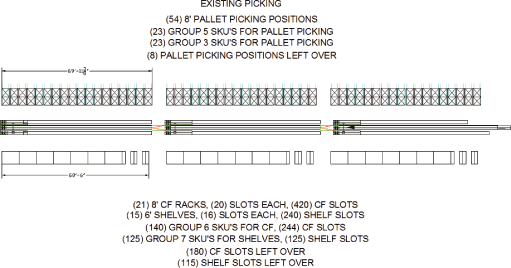
The Existing Picking Area will have all of the personalization SKU’s (Groups 5, 6 & 7) as well as the high volume SKU’s that are too large for carton flow (Group 3). (54) pallet flow locations will be on the right side of the pick aisle for fork truck access. (420) carton flow locations and (240) shelving locations will be located on the left side of the picking aisle with a replenishment line on the back side.
DCS will modify the existing picking areas to handle carton orders by performing the following operations:
| • | Adding a DC Powered Roller at each bi-directional UBT divert in each direction; this roller will enable the smaller cartons to move across the gap in between the UBT’s. | ||
| • | Adding Speed-up Spools prior to the UBT’s; this will create more gap between the smaller cartons and allow the braking system to create the proper gap. | ||
| • | Skewing rollers; this will keep all the cartons edge referenced and in line to avoid turning cartons and side by side cartons. |
12
2.4.2 New Lower Picking Area

The New Lower Picking Area will have all of the high moving and high volume SKU’s that fit in carton flow (Group 1) and all the low/medium moving, low volume SKU’s that fit into carton flow (Group 4). (1,040) carton flow locations in the two (2) picking aisles, room for (104) pallet locations behind the carton flow.
13
2.4.3 New Upper Picking Area
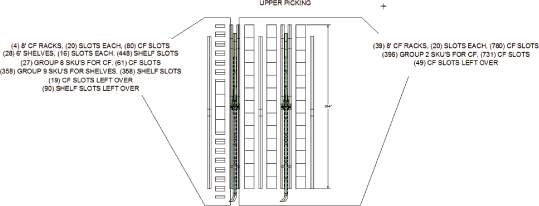
The New Upper Picking Area will have all of the high moving and medium volume SKU’s that fit in carton flow (Group 2) and all the jewelry SKU’s (Groups 8 & 9). (860) carton flow locations in the two (2) picking aisles, and (448) shelving locations in the jewelry area.
2.4.4 New System Storage Totals
| Carton | ||||||||||||
| Pallet Flow | Flow | Shelving | ||||||||||
|
Existing Picking | 46 | 244 | 125 | |||||||||
|
New Lower Picking | 0 | 742 | 0 | |||||||||
|
New Upper Picking | 0 | 792 | 358 | |||||||||
|
| ||||||||||||
|
| ||||||||||||
|
Total Storage Required | 46 | 1778 | 483 | |||||||||
|
| ||||||||||||
|
Available Storage | 54 | 2320 | 688 | |||||||||
|
| ||||||||||||
|
Available for SKU’s not in Data | 8 | 542 | 205 | |||||||||
|
Approx. SKU’s not in Data (462 SKU’s of 1,800) | 0 | 257 | 205 | |||||||||
|
| ||||||||||||
|
Remaining Storage for Growth | 8 | 285 | 0 | |||||||||
| * | Note: Storage capacities for the carton flow and shelving are based on each SKU requiring an 18” square picking face. The majority of SKU’s will not require this large of a picking face, allowing for additional picking faces to be created in these storage mediums. |
14
3.0 Description of Operation
3.1 General Overview
This system is designed to facilitate the picking, personalization, packing and shipping of orders for RedEnvelope’s Order Fulfillment Center located in Lockbourne, Ohio. Orders will be started in one of two areas: the Existing Picking Area for orders requiring picks from that area, and the New Picking Area for all other orders. Orders will be routed through these two pick areas until all picks have been made. The system will also direct orders requiring personalization into the personalization area, and divert them to the various personalization areas for different operations.
Once all picks and personalization operations have been completed, orders will be sent to one of two places. Orders requiring gift boxes will be sent to the gift box line where an operator will insert the correct gift boxes. From here, these orders will be sent to the Packing Area to be placed into the gift boxes before shipping. From the Packing Area, orders will be conveyed to the Shipping Area to be check weighed and diverted down the appropriate shipping lane. Orders not requiring gift boxes will be sent directly to the Shipping Area for check weighing and diverted down the proper shipping lane.
3.2 Existing Picking Area
3.2.1 General Area Description
Layout
The Existing Picking Area will remain similar to the current layout. It will consist of one (1) picking aisle containing six (6) picking zones with three (3) bi-directional UBT’s delivering orders to the zones. Five of the zones will contain all the SKU’s that may require personalization, two (2) zones of pallet flow picking (Group 5), and three (3) zones of a carton flow/shelving picking (Groups 6 & 7). The sixth zone will contain SKU’s that do not require personalization, but are too large to go into the carton flow located in the New Picking Area (Group 3).
Picking
All orders that require picks from the Existing Picking Area will be started similar to today’s operations. Orders will be sent down from PKMS and shipping labels will be created. The operator will place the shipping labels on the shipping cartons in the orientation specified in Section 4.5 of this proposal. Once the label has been applied, the operator will place the carton on the conveyor with the barcode on the right side in the direction of travel where it will be routed automatically to the proper picking zones. Once in a zone, the operator will scan the shipping barcode with an RF gun which will alert the operator of the required picks, make the appropriate picks, scan the SKU barcodes to confirm those picks, and push the carton back onto the conveyor to be routed to the next picking zone.
Two types of orders will be started in the Existing Picking Area, orders that have picks requiring personalization, and orders that do not have any items that require personalization.
15
Orders that start in this area that do not require personalization may be personalization SKU’s that have been ordered without that feature, or orders requiring items for the Group 3 SKU’s.
An order that has at least one personalization item in it will route through the Existing Picking Area getting all picks from the five (5) personalization pick zones. All picks for a SKU will be made at this time regardless of how many need personalization. It will then be routed to the personalization area. Once all personalization operations have been completed, the order will come back into the Existing Picking Area for the remainder of the picks in that area if they are required. Once the balance of the picks have been completed, the order will be conveyed to the Packing Sorter for gift boxing, or the New Picking Area for additional Picks or to go to shipping.
An order that does not have any items requiring personalization will be routed though the Existing Picking Area to get all the required picks, and then conveyed to the Packing Sorter for gift boxing or the New Picking Area for additional Picks or to go to shipping.
Replenishment
The pallet flow positions will be replenished by a fork truck operator. The carton flow and shelving locations will be replenished by operators with mixed pallets. An option has been provided for the New Picking Sorter to deliver replenishment to the carton flow and shelving via an accumulation line behind the pick zone.
Storage
The Existing Picking Area will consist of (54) pallet flow positions for SKU Groups 3 & 5, (420) carton flow locations for SKU Group 6, and (240) shelving locations for SKU Group 7.
Trash Line
An option has been provided to install a trash line running the entire length of the Existing Picking Aisles to dump corrugate into a hopper/bailer at the infeed end.
3.2.2 Conveyor Operation
Layout
The Existing Picking Area will consist of one (1) picking aisle containing six (6) picking zones with three (3) bi-directional UBT’s delivering orders to the zones. The pick zones are serviced by three (3) main delivery and take away lines, EP-102, EP-107 & EP-112 that deliver cartons to the three (3) bi-directional UBT diverts, EP-103, EP-108 & EP-113. Each UBT divert is equipped with a carton gapping function and a barcode scanner. The conveyor will gap the cartons, scan the barcode, and determine if the carton needs to divert left, right, or be sent straight to the next UBT divert for the proper picks. If an order has items that require personalization, its first pass through the Existing Picking Area it will get all picks for each SKU that requires some personalization. Once all the personalization operations have been performed, the order will come back from Personalization Area to the Existing Picking Area for the remainder of the picks, via the Personalization take-away line VAS-110, if required.
16
Picking
Operators will start orders requiring picks from this area at EP-106A and place them on delivery conveyor EP-102. The operator will place the shipping barcode on the shipping carton in the location specified in section 4.5 of this proposal, and place the carton on the main delivery line EP-102 with the barcode on the right side in the direction of travel. Cartons will then be accumulated and conveyed to bi-directional UBT EP-103. At EP-103, the cartons will be gapped and have the shipping barcode scanned. DCS will determine if this order needs a pick from the two (2) pick zones that EP-103 delivers to. If so, the order will be diverted into that zone and conveyed onto gravity conveyor EP-106A or EP-106B. Once the operator has made and confirmed the appropriate picks for an order, he/she will place that carton back onto EP-102 in the proper orientation where it will be scanned again at EP-103
If this order needs picks from the pick zone on the opposite side from its first divert through EP-103, it will divert into that zone to get those picks as well. If the order does not need additional picks from these two pick zones, it will convey past UBT EP-103 and accumulate and convey to the next UBT EP-108. All three picking diverts will operate in similar fashion.
Once all the picks have been made for an order from the Existing Picking Area, the order has two options. If the order requires a gift box, it will be diverted by UBT EP-113 into that picking zone, but rather then move into the pick zone, it will be conveyed away from the Existing Picking Area by receiving UBT EP-114B similar to how hospital totes are diverted now. From here orders will accumulate on EP-120 and be merged onto the Packing Sorter recirculation line PS-110.
Cartons from EP-120 will continue to merge onto the recirculation line PS-110 until a photo eye detects cartons recirculating from the Packing Sorter. At this point, the cartons from the Existing Picking Area on EP-120 will stop merging and wait for the recirculation line to clear before releasing again.
If the order does not require a gift box, requires additional picks from the New Picking Area, or needs to go directly to shipping, it will convey past UBT EP-113 onto NP-101 and up to the New Picking Area.
3.3 New Picking Area
3.3.1 General Area Description
Layout
The New Picking Area will consist of four (4) picking aisles containing four (4) picking zones, each with one (1) 4-directional ERS divert delivering orders to the zones in each aisle. There will be two (2) picking aisles in the Lower Picking Area, and two (2) picking aisles in the Upper Picking Area.
17
The Lower Picking Area will consist of eight (8) pick zones that contain all carton flow. The SKU’s in this area are larger, fast moving items that require the majority of replenishments of all the SKU’s in the building (Group 1). Each SKU will hold multiple carton flow slots, and have a minimum of one pallet of that SKU behind the carton flow. Mixed in the carton flow with these high volume SKU’s will be the SKU’s from Group 4. These are slow moving SKU’s that will be placed in the least ergonomic slots of the carton flow due to their lack of volume.
The Upper Picking Area will consist of eight (8) pick zones, two (2) of these zones will contain all of the jewelry items (Groups 8 & 9) and will utilize carton flow and shelving. The remaining six pick aisles will contain the SKU’s from Group 2, these are fast moving, smaller SKU’s that will get a high number of picks, but not as much replenishment volume as Group 1. These pick zones will consist of carton flow.
Picking
All orders started in the New Picking Area will be started similar to how the Existing Picking Area operates. Orders will be sent down from PKMS and shipping labels will be created. The operator will place the shipping labels on the shipping cartons in the orientation specified in Section 4.5 of this proposal. Once the label has been applied, the operator will place the carton on the induction conveyor with the barcode on the right side in the direction of travel, where it will be routed automatically to the proper picking zones. Once in a zone, the operator will: scan the shipping barcode with an RF gun which will alert the operator of the required picks, make the appropriate picks, scan the SKU barcode to confirm those picks, and push the carton back onto the conveyor in the proper orientation to be routed to the next picking zone.
When an order is inducted onto the induction conveyor, it will be merged with in-process orders and inducted into the New Picking Sorter. This sorter will route the orders to the appropriate picking aisles using Dynamic Picking routing. Dynamic Picking will allow an order to bypass a picking aisle that it requires a pick from that is full and go to the next available aisle it requires a pick from. The only exception to this is to orders that require a jewelry item. Jewelry items will always be the last items picked on an order so that these high priced items pass through as few hands as possible.
Once all of the picks have been made, the order has three (3) options. If the order contains jewelry items only, it will be sent to the packing sorter and diverted to the Jewelry Packing Area. An order that requires a gift box, or contains jewelry items as well as non-jewelry items will be sent to the Packing Sorter and diverted to the gift box line. Orders that do not require gift boxes and do not have jewelry will be sent directly to shipping.
Storage
The Lower Picking Area will consist of (1,040) carton flow locations which will hold the SKU’s from Group 1 & Group 4. The Upper Picking Area will consist of (860) carton flow locations for SKU Groups 2 & 8, and (448) shelving locations for SKU Group 9.
18
Replenishment
The SKU’s from Group 1 in the Lower Picking Area will be replenished by fork truck operators dropping full pallets of SKU’s and operators with pallet jacks locating those pallets behind the carton flow. Operators replenishing the carton flow racks will pull cartons from these pallets, cut the tops off, and place them in the carton flow. The SKU’s from Group 4 in the Lower Picking Area will be replenished by sending replenishment cartons down the pick aisle and diverting them into the appropriate pick zone. Replenishment operators will grab these cartons and place them in the carton flow. The SKU’s from Groups 2, 8 & 9 in the Upper Picking Area will be replenished by sending replenishment cartons down the conveyor on the backside of the carton flow and shelving. Replenishment operators will replenish the picking locations from these lines.
Trash Line
The base system has a trash line at the end of each picking aisle, two (2) conveyors total, and one (1) on both the upper and lower level. Operators will walk corrugate to the end of the pick module and throw it over the guard rail on the conveyor. Both trash conveyors will dump corrugate into an automatic bailer. An option has been provided to deliver corrugate to the location of the existing bailer.
3.3.2 Conveyor Operation: Drawing MCL 1003 & 1004
Layout
The New Picking Area will consist of four (4) picking aisles containing four (4) picking zones each with one (1) 4-directional ERS divert delivering orders to the zones in each aisle. There will be two (2) picking aisles in the Lower Picking Area, and two (2) picking aisles in the Upper Picking Area. Each picking aisle will operate the same way. The Upper Picking Area will have replenishment lines that run behind the carton flow.
Picking
Orders will come to the New Picking Area from two (2) lines. Orders started in this area will be inducted on NP-220, elevated to 16’-6” by incline NP-221, and merged into the take away line for the Upper Picking Area NP-205. Orders not started in this area will come from the Existing Picking Area on NP-101 and will be merged into the take away line for the Lower Picking Area NP-104.
New orders for this area merged with orders from the Upper Picking Aisles will be declined by NP-206 & NP-207 to 8’-6” top of roller. These orders will then begin to accumulate on accumulation conveyor NP-208 prior to merging with orders from the Lower Picking Area at merge NP-109. Orders will be slugged onto this merge by belt conveyor NP-209.
Orders from the Existing Picking Area merging with orders from the Lower Picking Area will be inclined by NP-106 to 8’-6” top of roller. These orders will then begin to accumulate on conveyor NP-107 prior to merging with orders from the Upper Picking Area at merge NP-109. Orders will be slugged onto this merge by belt conveyor NP-108.
19
Once cartons are merged at NP-109, they will be accumulated and conveyed to NP-110 & NP-111 the gapping, scanning and induction belts prior to the New Picking Sorter. The two (2) induction belts, NP-110 & NP-111 have speed ratios that allow the induction to be a blow through induction, meaning that the induction belts do not have to stop and start, or change speeds to create the appropriate gap. The ratio of the speeds of the belts to each other creates the required gap between the cartons for the sorter. This provides a smoother induction and reduces the chance of cartons turning or tipping.
Once cartons are on belt conveyor NP-111, they will be scanned and conveyed onto belt curve NP-112, and inducted onto the New Picking Sorter NP-114. The New Picking Sorter will be an Ermanco NBS Wave Sorter with nine (9) diverts. Four (4) diverts go into the picking aisles, three (3) diverts go into the Upper Picking Area replenishment lines, one (1) divert goes to the Shipping Area, and one (1) divert goes to the Packing Sorter. Any carton that cannot divert due to a lane full or is a failed divert (didn’t make it off the sorter) will convey to the end of the sorter and onto incline NP-202 where it will be elevated to 16’-6”, and be merged back in with the Upper Picking Area orders to be re-inducted into the New Picking Sorter.
Orders that are diverted into one of the Picking Aisles will be inclined/declined to a 30” elevation from the floor or the top of the mezz. Once at the right elevation, orders will accumulate prior to the 4-directional ERS diverts, NP-133, NP-143, NP-243 & NP-263. Prior to each ERS divert, the carton will be gapped and scanned. If the carton requires a pick from either or both of the two pick zones closest to the New Picking Sorter, it will be diverted into those picking zones, first assuming they are open. The ERS diverts are equipped with reversing rollers on the receiving UBT’s that allow the carton to divert left or right once on either side of the ERS.
Once all picks have been made from a zone, the operator will push it back onto the take-away line, NP-132, NP-142, NP-242 & NP-262, were it will be re-scanned and diverted to the next zone in that aisle if required, or conveyed past the ERS to be sent back to the New Picking Sorter. Once an order has been sent to a pick zone that is downstream from the ERS divert, if it requires additional picks from that aisle, it will have to be conveyed back through the New Picking Sorter to be re-inducted into that picking aisle again to get those picks. This is why all upstream zones will be hit first by an order.
Once all picks have been made in a picking aisle for an order, it will be accumulated prior to merging onto Upper and Lower Picking takeaway conveyors NP-104 & NP-205. The cartons from the pick module will be slugged out into the gaps on the line. Photo eyes on the take away lines will keep track of where cartons are and allow slugs to be released in sequence to achieve high throughput.
Orders that are complete and need to go directly to shipping will be sent to Divert 8, declined down the 1’-7” top of roller by NP-151, and accumulated on NP-152 prior to being inducted onto the existing take-away line for the alternate packing area S-120.
20
Orders that are complete and require a gift box, or have a jewelry item will be sent to Divert 9 and accumulated on NP-282, declined on existing decline NP-283, and accumulated on existing conveyor NP-284. From here orders will merge onto the Packing Sorter and being sent to the gift box lane.
Replenishment
All Replenishment cartons for SKU Groups 2, 4, 8 & 9 will be placed on the induction conveyor NP-220, or onto NP-101, the take away line for existing picking. SKU Group 4 replenishment cartons will be inducted onto the New Picking Sorter and diverted to the lower picking aisle where their pick face is located. Here they will divert into the proper picking zone and await a replenishment operator to place them in the back on the carton flow.
SKU Groups 2, 8 & 9 replenishment cartons will be diverted to the correct replenishment line, NP-232, NP-252 & NP-272, located behind the carton flow and shelving on the upper level.
3.4 Personalization Area
3.4.1 General Area Description
The Personalization Area will receive orders from the Packing Sorter, divert the order to the appropriate personalization zones, and then deliver the completed orders to the Existing Picking Area, or to the New Picking Area. It will consist of four (4) zones, one (1) zone each for Embroidery, Debossing, Engraving and a “hospital” area for orders that need additional processing or mistakes checked.
3.4.2 Conveyor Operation: Drawing MCL 1005
The Personalization Area will receive orders from divert 1 on the Packing Sorter and elevate them to 9’-0” top of roller and accumulate them via VAS-101 & VAS-102 respectively. Orders will then be declined by VAS-103, and accumulated prior to ERS divert VAS-105 on VAS-104. Orders will be gapped and scanned, and if the order needs to go to one of the first two personalization zones, it will divert left or right into that zone. Inside each of the personalization zones, items will be scanned, unpacked, personalized, checked and repacked. The checking operator will then push the carton back onto VAS-104 with the bar code on the right side in the direction of travel and it will be scanned again and diverted to the opposite side if required, or it will convey past VAS-105 onto VAS-106. Orders will then accumulate, be gapped and get scanned prior to ERS divert VAS-107, and divert left or right if required, or continue straight into the Existing Packing Area.
Orders coming from the Personalization Area will be accumulated on VAS-110, and gapped and scanned on VAS-111. If the order needs to get additional picks from the Existing Picking Area, or needs gift boxes, it will convey past Bi-Directional divert VAS-111A, other wise the order will be diverted by VAS-111A and onto the exiting early out line VAS-112. Orders that are diverted here will elevate to 10’-9” top of roller by incline VAS-113,
21
conveyed and accumulated by VAS-114, 115 & 116 and declined to 30” top of roller by decline VAS-117. Here, orders will accumulate on VAS-118 and merge onto NP-101 to get additional picks or to be sent to shipping.
3.5 Jewelry Packing
3.5.1 General Area Description
The Jewelry Packing Area will receive all orders that have jewelry only items. These orders will be placed in totes in the New Picking Area and delivered to the Packing Sorter where they will be sent to Divert 3. They will be elevated to 9’-0” top of roller and then back down to 5’-3” top of roller by PS-202 & 204. They will then travel down galvanized chute PS-206 onto accumulation conveyors PS-207, PS-208 & PS-209. Here operators will grab the totes and pack out the order into a carton or flat pack. Once the order is complete, the operator will turn and place it on take-away conveyors J-101 & J-102 where they will be conveyed towards the New Picking Area. Orders will be delivered to incline J-103 where they will be elevated to 6’-3” top of roller, scanned to verify the order similar to existing and dropped into a hamper similar to existing operations.
3.6 Packing Sorter
3.6.1 General Area Description: Drawing MCL 1006
The Packing Sorter will remain similar to the existing layout. It will receive orders from the Existing Picking Area via EP-120, and the New Picking Area via NP-284. It will have four (4) diverts, one (1) divert each going to the Personalization Area, the Gift Box Line, the Jewelry Packing Area and the Gift Wrap Line.
The throughput requirements for this sorter will be greatly reduced by going to pick to carton. It will no longer have to handle 100 % of the orders going to shipping because 60% — 70% will now bypass the packing area.
3.7 Packing Area
3.7.1 General Area Description
The Packing Area will receive all orders that require a gift box, or have jewelry items and non-jewelry items. These orders will be sent to Divert 2 on the Packing Sorter and accumulate on gravity conveyor PS-120 & 121. Once the operator has placed the gift boxes into the carton, they will push it onto take away-line P-101. Orders will be conveyed by P-101 and P-102 into the Packing Area and accumulate on P-103, 104 & 105 at 30” top of roller. Operators will pull orders from these lines, perform the packing operations, and place them on take away lines P-106 and P-108. These lines will deliver the packed orders to the Shipping Area via P-109.
22
3.8 Shipping Area
3.8.1 General Area Description
The shipping area will receive orders from the New Picking Area and the Packing Area. These orders will be merged together, accumulated and gapped. They will then be inducted onto an In-motion scale for check weighing and bar code scanning. Orders will divert to the appropriate shipping lane for palletization or to the hospital lane if there is an issue.
3.8.2 Conveyor Operation
The shipping area will receive orders from the New Picking Area via NP-153 onto S-120, and the Packing Area via P-109 onto S-112. Orders from the New Picking Area will be accumulated on S-121 and merged with orders from the Packing Area at S-101. Belt conveyor S-122 will slug the orders into the merge and elevate them from 1’-7” to 3’-4” top of roller.
Orders from the Packing area will be elevated to 9’-0” top of roller by S-112, accumulated on S-113 and merged with recirculated cartons at S-115. The orders will then accumulate and merge with orders from the New Picking Area at S-101. Belt decline S-116 will decline these orders to 3’-4” top of roller and slug them into the merge.
After merging, orders will accumulate on S-102 prior to being gapped on belt conveyor S-103. Once gapped, orders will be inducted onto In-Motion Scale S-105 by S-104 where they will be weighed and scanned. Orders will then be diverted down the appropriate shipping lane or to the hospital lane if there is an issue.
Orders that are destined for a full lane or mis-divert will be sent through the recirculation line and merged back in with order coming from the packing area.
23
3.9 Order Routing
Below is the order in which DCS will process the divert locations we receive from WM for all orders:
| 1. | Picking of VAS items |
| o | (5) Pick Zones in existing picking area |
| 2. | VAS Process diverts |
| o | (4) VAS processing areas |
| 3. | Non-VAS item picking |
| o | (1) Pick Zone in the existing picking area | ||
| o | (14) Pick Zones in the new picking area |
| 4. | Jewelry Item Picking |
| o | (2) Pick Zones in the new picking area |
| 5. | Jewelry Gift box |
| o | (2) Pick Zones in the new picking area |
| 6. | Gift Wrap |
| o | (1) Wrapping Zone in the existing packing area |
| 7. | Jewelry only Packing |
| o | (1) Packing Zone in the existing packing area |
| 8. | Gift Box |
| o | (1) Pick Zone in the existing packing area |
| 9. | Non-Gift Box Packing (orders with Jewelry and another item) |
| o | (1) Packing Zone in the existing packing area |
24
4.0 Specifications and Engineering Calculations
4.1 Loads to be Handled
This system is designed to convey both cartons and totes (totes are used for Jewelry only orders and are not required to convey through the entire system). The cartons represent a wide range of sizes with a large variation in the three different dimensions.
This system was designed on the following principle: To be properly and consistently conveyed, a carton should be longer than it is wide. If a carton is “square” or the length and width dimensions are close to the same, the orientation of the carton will be difficult to maintain. With respect to the design of the system, the longest box dimension will be considered the length. The next biggest dimension will be the width and the smallest the height.
4.1.1 Load Sizes
Below is a table listing out specifications given to us for this proposal.
| RedEnvelope Carton & Tote Sizes | ||||||||||||||||
| Outside Dimensions | ||||||||||||||||
| Carton # | % Usage | Length | Width | Height | ||||||||||||
|
10A | 24.2 | % | 10 | 8 | 4 | |||||||||||
|
12A | 3.0 | % | 12 | 10 | 4 | |||||||||||
|
12B | 13.1 | % | 12 | 10 | 8 | |||||||||||
|
12C | 3.4 | % | 12 | 12 | 12 | |||||||||||
|
14A | 10.5 | % | 14 | 14 | 8 | |||||||||||
|
15A | 3.6 | % | 15 | 15 | 16 | |||||||||||
|
16A | 14.6 | % | 16 | 16 | 10 | |||||||||||
|
24A | 8.7 | % | 24 | 12 | 12 | |||||||||||
|
24B | 9.8 | % | 24 | 15 | 22 | |||||||||||
|
28A | 1.0 | % | 28 | 18 | 8 | |||||||||||
|
29A | 8.1 | % | 29 | 11 | 15 | |||||||||||
|
Tote | N/A | 25 | 19.5 | 10 | ||||||||||||
| • | Average Carton Length based on percentage of usage of each length of carton is 14.2”. We will use 15” for throughput calculations. |
| o | Note: If the 10A carton is made to be 12” long, the average carton length is still less than 15”. |
25
4.2 Throughput Calculations
Overall Throughput
Max throughput requirement: 35,000 orders per day
CPM requirement for System: 35,000 orders ÷ 16 hours/day (2 shifts) = 2,187.5 CPH
2,187.5 CPH ÷ 60 minutes/hour = 36.5 CPM
Therefore, design for 37 CPM
New Picking Sorter
New Picking Sorter throughput requirement: 88% of all orders will go through the New Picking Sorter
CPM requirements: 37 CPM × 0.88 = 32.5 CPM
Therefore, design for 35 CPM
Number of times those 35 CPM go through induction:
35 CPM × (1 (induction) + 1 (exit) + 0.35 (multiple pick aisles) + 0.15 (replenishment))
35 CPM × 2.5 times through induction = 87.5 CPM
Therefore, design for 100 CPM
New Picking Aisle
New Picking Aisle throughput requirement: 88% of all orders will go through the New Picking Aisles
Max CPM requirements (Jewelry Aisle): 9 CPM Avg + 10% spike = 10 CPM
Therefore, design for 10 CPM
Number of times those 10 CPM go through induction:
10 CPM × (1 (induction) + 0.2 (multiple pick zones) + 0.5 (re-induction)) = 17 CPM
Therefore, design for 18 CPM
26
Existing Picking Area
Existing Picking Area throughput requirement: 24% of all orders will go through the Existing Picking Area
Order CPM requirements: 37 CPM × 0.24 = 9 CPM
Number of times those 9 CPM go through induction:
9 CPM × (1 (induction) + 0.3 (re-induction)) = 11.7 CPM
Personalization CPM requirements: 2.2 CPM going through the Existing Picking Area again
Total: 11.7 CPM + 2.8 CPM = 14.5 CPM
Current System handles 15 CPM
Existing Shipping Sorter
Existing Shipping Sorter throughput requirement: 95% of all orders will go through the Existing Shipping Sorter
CPM requirements: 37 CPM × 0.95 = 35 CPM
Therefore, design for 35 CPM
Number of times those 35 CPM go through induction:
35 CPM × (1 (induction) + 0.1 (recirculation)) = 38.5 CPM
Current System handles 30 CPM
27
4.3 New Picking Sorter Throughput Design
Design for 100 CPM

28
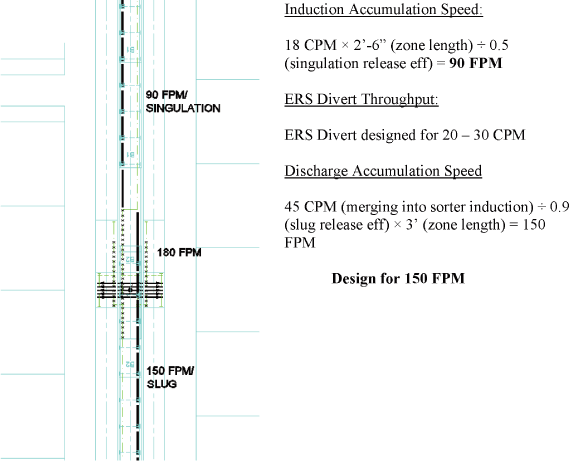
4.4 New Picking Aisle Throughput Design
Design for 18 CPM
29
4.5 Barcode Specifications
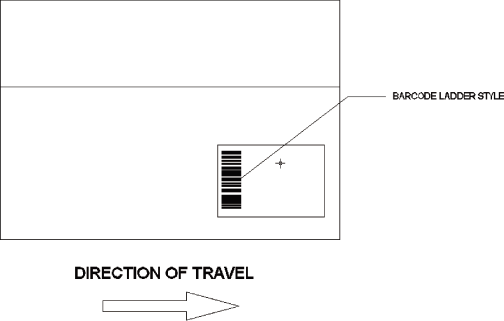
This system is designed to read a barcode label placed in the ladder orientation on the right side of the carton / tote. The barcode label is to be located toward the front, bottom corner of the carton / tote as shown. A specific location will be determined in collaboration with RedEnvelope.
The barcode specifications used for this proposal are as follows:
4.5.1 Shipping Carton
| Existing Picking, VAS, Packing Sorter, New Picking Induction, New Picking Aisles, Shipping Sorter & Jewelry Packing | ||||||
|
| ||||||
|
| • | Symbology: | UCC 128 subset A switching to subset C after 1Z | |||
|
| ||||||
|
| • | Characters: | 18 | |||
|
| ||||||
|
| • | Min Narrow element: | 0.015” | |||
|
| ||||||
|
| • | Pattern Height: | ³1.0” | |||
|
| ||||||
|
| • | Quiet Space: | ³0.25” | |||
4.5.2 Order Tote
| New Picking Induction & New Picking Jewelry Aisle | ||||||
|
| ||||||
|
| • | Symbology: | UCC 128 subset B | |||
|
| ||||||
|
| • | Characters: | 10 (1 letter, 9 digits) | |||
|
| ||||||
|
| • | Min Narrow element: | 0.015” | |||
|
| ||||||
|
| • | Pattern Height: | ³1.0” | |||
|
| ||||||
|
| • | Quiet Space: | ³0.25” | |||
4.5.3 Replenishment Carton
| New Picking Induction, Existing Picking Area | ||||||
|
| ||||||
|
| • | Symbology: | UCC 128 subset B | |||
|
| ||||||
|
| • | Characters: | 10 (1 letter, 9 digits) | |||
|
| ||||||
|
| • | Min Narrow element: | 0.015” | |||
|
| ||||||
|
| • | Pattern Height: | ³0.75” | |||
|
| ||||||
|
| • | Quiet Space: | ³0.25” | |||
30
4.5.4 Barcode Orientation
31
| 5.0 | Mechanical Equipment | |
| 5.1 | General System Equipment |
Below are the various mechanical specifications for the different types of equipment that DCS will be integrating into this system. This listing represents equipment that is located throughout the various areas.
| • | Zero Pressure Accumulation Conveyors |
| O | Ermanco NBA 23 – 22” B.F. |
| § | Rollers: 1.9” dia. x 16 ga. rollers – 7/16” Hex steel axle, spring retained on 3” centers |
| • | ABEC Precision Bearings |
| § | Frame: CRUZ channel 7 1/2'' x 1 5/8'' x 12 gauge formed channel | ||
| § | Drive Belt: 2” wide w/welded splice | ||
| § | Zones: 3’ zones with CRUZcontrol photo eyes |
| O | Ermanco XP43CZ Xenopressure – 22” B.F. |
| § | Rollers: 1.9” dia. x 16 ga. rollers – 7/16” Hex steel axle, spring retained on 3” centers |
| • | ABEC Precision Bearings |
| § | Frame: CRUZ channel 7 1/2'' x 1 5/8'' x 12 gauge formed channel | ||
| § | Drive Shaft: 1” dia. TG&P cold rolled steel | ||
| § | Zones: 3’ non-contact zones with CRUZcontrol photo eyes |
| • | Transportation Conveyors |
| O | Ermanco XenoROL XR40 – 22” B.F. |
| § | Rollers: 1.9” dia x 16 ga. rollers – 7/16” Hex steel axle, spring retained on 3” centers |
| • | ABEC Precision Bearings |
| § | Frame: CRUZ channel 7 1/2'' x 1 5/8'' x 12 gauge formed channel | ||
| § | Drive Shaft: 1” dia. TG&P cold rolled steel |
| • | Incline/Decline Belt Conveyors |
| O | Ermanco CRUZbelt 15 deg Inclines/Declines – 22” B.F. |
| § | Rollers: 1.9” dia. x 16 ga. rollers – 7/16” Hex steel axle, spring retained on 6” centers |
| • | ABEC Precision Bearings |
| § | End Pulleys: 2-1/2” dia. for smooth transition of small products | ||
| § | Belting: Monofilament Belt | ||
| § | Frame: CRUZ channel 7 1/2'' x 1 5/8'' x 12 gauge formed channel | ||
| § | Take-up: Self aligning |
32
| • | Live Roller Curves |
| O | Ermanco RLC 25 – 22” B.F. |
| § | Rollers: 1.9” dia. x 16 ga. rollers – 7/16” Hex steel axle, spring retained on 3” centers with true taper |
| • | ABEC Precision Bearings |
| § | Frame: CRUZ channel 7 1/2'' x 1 5/8'' x 12 gauge formed channel | ||
| § | Drive Belt: Spliceable with greater tensile strength than standard v-belts |
| • | Lineshaft Curves |
| O | Ermanco XR40 Curves – 22” B.F. |
| § | Frame: CRUZ channel 7 1/2'' x 1 5/8'' x 12 gauge formed channel | ||
| § | Rollers: Rollers: 1.9” dia. x 16 ga. rollers – 7/16” Hex steel axle, spring retained on 3” centers | ||
| § | Drive Shaft: 1” dia. TG&P cold rolled steel |
| • | Belt Curve |
| O | Transnorm Systems TS1500/140 Power Belt Curve |
| § | 38”Inside Radius | ||
| § | 90° Power Curve | ||
| § | Belt Width: 21”, 22” between guards | ||
| § | Drive: 1 HP SEW Eurodrive motor and reducer 230/460/60/3 | ||
| § | Belt: Black, High Friction, Clipper Laced |
| • | Trash Conveyor |
| O | HK Systems BSE Slider Bed Belt Conveyor |
| § | End Drive with 4 1/2” dia. lagged pulley with 1 3/16” Shaft | ||
| § | End Take-up with 3 1/2” dia. pulley with 1 1/8” square shaft | ||
| § | 7 1/2” deep x 10 ga. formed channel frames | ||
| § | Center take-up with 3 1/2” dia. pulley |
| 5.2 | Sortation Conveyor |
| • | Brake/Spacer Belt Conveyor |
| O | Ermanco CRUZbelt– 22” B.F. |
| § | Slider Bed: Formed pan | ||
| § | End Pulleys: 2-1/2” dia. for smooth transition of small products | ||
| § | Belting: Monofilament Belt | ||
| § | Frame: CRUZ channel 7 1/2'' x 1 5/8'' x 12 gauge formed channel |
33
| • | High Speed Sorter |
| O | Ermanco NBS 30 Wave Sorter |
| § | Frame: 5 3/4” x 10 ga | ||
| § | End Pulley: 6-5/8” deep x 10 ga. frame, 4” dia. flat face | ||
| § | End drive: 20-7/8” deep x 7 ga. frame, 8” dia. pulley flat face | ||
| § | Wave Diverter: 9-1/4” deep x 10 ga. frame, 6 rows of wheels | ||
| § | Belts: PVC 1.25” w x .203” thick, 85 Durometer | ||
| § | Belt guides: Low friction UHMW |
| • | 4-Directional Sorter Conveyor (New Picking Area) |
| O | Ermanco ERS |
| § | 1/2 HP VFD Reversible Drive | ||
| § | 5-strands on 4” centers | ||
| § | (2) receiving UBT’s with Reversing DC Powered Rollers |
34
| 5.3 | Conveyor Schedule |
35
| 5.4 | Mechanical Equipment Literature |
36
| 6.0 | Conveyor Control System | ||
| 6.1 | General Scope |
The control system design, hardware design, and controls installation will meet the National Electric Code. We have not included any cost or schedule impact for design, installation, or equipment modifications required as a result of local codes or special customer specifications. Layout drawings will show the location of all control devices, including sensors, panels, operator stations, etc.; however, conduit drawings are not provided. The electrical drawings will be produced in general accordance with the Joint Industrial Council standards. All electrical layouts and schematics will be computer generated.
The customer is responsible for providing the following power:
| • | 480V/3ph/60Hz power to the line-side of disconnects in the individual motor control panels. There could be one to three individual control panels for the entire system, requiring a total of 400 Amps with a maximum Short Circuit Current Rating of 5,000 Amps per control panel. Control power will be transformed to 120V/1ph/60Hz and 24Vdc to provide power for logic relays, motor starters, photoelectric, and limit switches and other conveyor control equipment. This control power source is not conditioned, nor is it intended to survive the loss of plant utility power. When plant utility power fails, all electrical devices associated with this source will fail to the OFF state. When power is restored, a re-initialization sequence is required to return the system equipment to an operational mode. |
| 6.2 | General Electrical Installation Details |
A. Panel Build
Build and wiring included.
B. Electrical installation
Our installation crew will consist of personnel from DCS, Inline Elec. and In-Tech Controls.
EMT Conduit w/ Nema 1 boxes with Wire Nut Connections.
All wiring materials supplied by Inline or In-Tech.
Standard Installation — weekday/1st shift with possible Saturday tie in.
C. System startup
Startup and Debug will start after installation is complete and enough product is available to test with.
37
| 6.3 | Electrical Equipment listing as a complete system per design |
A. Control Panel Specifications
| O | - (-) Control Enclosures, Nema 12, floor mount with: |
- (-) Disconnects, 480 volt, 3 phase
- (-) Control Transformer, 480Vac x 120Vac
- 480Vac Fusing & Breakers
- 120Vac Fusing & Breakers
- (71) IEC Manual Motor Starters
- (13) AB Frequency Drives
- (1) Enclosure Lighting Transformer and Disconnect
- (-) Allen Bradley Control Logics, Flex I/O Output Card Fusing
- (2) Start/Stop master control
- (-) 4 Light Stack and Alarm
- (-) 1 Door Port and Receptacle
- (1 Lot) Terminals, Duct, Wire, etc......
B. Field Devices
- (90) Allen Bradley sensing devices
- (23) Pull Cords
- (84) Motor Safety Toggle Switches
- (2) Air Switch
- (1) Encoders – Assuming Wave Sorter Comes With
- Wiring for 50 Solenoids
C. Push Button Stations
- (2) PB Stations w/ 1-Lighted E-Stop
38
| 6.4 | DCSware Conveyor Control Software |
| 6.4.1 | Material Flow Applications |
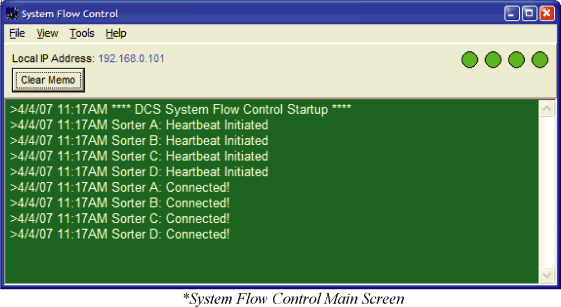
Two main applications manage the flow of material through the system, System Flow Control and Link Administrator.
| A. | System Flow Control | ||
The System Flow Control (SFC) application manages the barcode scanners, pick location hierarchy, sorters, and PLC communications.
| 6.4.1.A.1 Sorter Manager |
SFC’s Sorter Manager utility is used to configure the conveyor system’s sorters. Each Sorter has the following configurable parameters available:
| Field | Value | Type | Comments | |||
|
ID | Identifies Sorter | VARCHAR(2) | Unique ID for Sorter | |||
|
| ||||||
|
Description | Sorter Name | VARCHAR(20) | Sorter Name | |||
|
| ||||||
|
ShortDescription | Short Description | VARCHAR2(6) | Used to link system messages with the appropriate sorter. Found in the application logs. | |||
|
| ||||||
|
OPCTopic | Identify which PLC to communicate with | VARCHAR(10) | Must be setup in RSLinx first | |||
|
| ||||||
|
GiftBoxLane | Gift box lane | INT | Designate the lane for cartons with Gift Box = ‘Y’ | |||
|
| ||||||
|
NoReadLane | Identify the no read lane | INT | When a barcode is unread | |||
|
| ||||||
|
UnderWeightLane | Under Weight Lane | INT | Assigns this sorters under weight lane; Ignore if no scale present | |||
39
| Field | Value | Type | Comments | |||
|
OverWeightLane | Over Weight Lane | INT | Assigns this sorters over weight lane; Ignore if no scale present | |||
|
| ||||||
|
CartonNotFoundLane | Carton Not Found Lane | INT | If the barcode is not found in the database, the package will be sent to this lane. | |||
|
| ||||||
|
SorterRunningTag | Sorter Running Tag | VARCHAR(20) | Internal Status Flag | |||
|
| ||||||
|
HBTag | Heart Beat Tag | VARCHAR(20) | Establishes communication with the PLC | |||
|
| ||||||
|
BarcodeTag | Barcode Tag | VARCHAR(20) | Scanned Barcode | |||
|
| ||||||
|
IDTag | ID Tag | VARCHAR(20) | Internal Tracking Tag | |||
|
| ||||||
|
DiverTag | Divert Tag | VARCHAR(20) | Internal Tracking Tag | |||
|
| ||||||
|
ConfirmTag | Confirm Tag | VARCHAR(20) | Internal Tracking Tag | |||
|
| ||||||
|
FailTag | Fail Tag | VARCHAR(20) | Internal Tracking Tag | |||
|
| ||||||
|
PauseInductionTag | Pause Induction Tag | VARCHAR(20) | Instructs the sorter to stop induction | |||
|
| ||||||
|
Scale | Scale Present | VARCHAR(1) | Barcode Tag will include a weight string | |||
|
| ||||||
|
IPAddress | IP Address | VARCHAR(15) | IP Address | |||
|
| ||||||
|
NumberOfDiverts | Number of Diverts | INT | Number of Diverts | |||
|
| ||||||
|
TypeOfSorter | Type of Sorter | VARCHAR(1) | Type of Sorter | |||
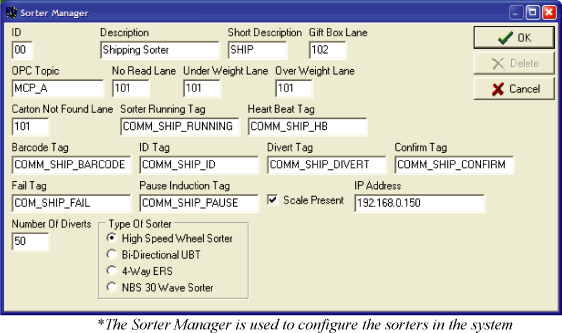
*Note: Sample images only – actual application may vary in appearance and functionality.
| 6.4.1.A.2 Carton History |
The SFC records the creation and divert history of each carton. This information is stored in the CartonHistory table. This information is used to assist with troubleshooting.
40
| 6.4.1.A.3 Carrier Management |
The lane assigned to a shipping carrier can be modified at anytime through the SFC. Any cartons that have passed through the shipping sorter’s scan tunnel will not be aware of the change. It is best to perform carrier management while the shipping sorter has stopped or is empty.
| 6.4.1.A.4 Completed Cartons (Shipped Cartons) |
Cartons that have been confirmed are removed from the Carton table (and CartonHistory) and transferred to the CompletedCarton (and CompletedCartonHistory) table. The purpose of this move is to keep the production tables small in order to maximize efficiency. The Completed Cartons are purged according to the value of Configuration Parameter 1110 (Purge Old Carton Data).
| B. | Link Administrator |
The Link Administrator (LinkAdmin) manages the communications between the DCS Flow Applications and Manhattan. The primary means of communication are via File Transfer Protocol (FTP) and Socket Messaging, both of which are explained in the messaging section of this document.
| 6.4.1.B.1 Carton Weight Tolerance |
When a carton is downloaded the minimum weight and maximum weight are calculated based on the Tolerance field in the CartonSize table.
| 6.4.1.B.2 Configuration Parameters |
| ID | Description | Default Value | Comments | |||||
|
ID | Identifies Sorter | VARCHAR(2) | Unique ID for Sorter | |||||
|
| ||||||||
|
1000 | Do Passwords Expire? | NO | ||||||
|
| ||||||||
|
1010 | Days before a password expires | 90 | ||||||
|
| ||||||||
|
1100 | Purge Old Carton Data | YES | Disabled only during debug | |||||
|
| ||||||||
|
1110 | Days to keep Old Carton Data | 90 | Not to exceed 120 days | |||||
|
| ||||||||
|
1200 | Purge Log Files | YES | Disabled only during debug | |||||
|
| ||||||||
|
1210 | Days to Keep Log Files | 120 | Not to exceed 120 days | |||||
|
| ||||||||
|
1400 | Wave File Download Path | C:\\DCS\\Downloads\\ | ||||||
|
| ||||||||
|
1410 | Wave Data Flag File Name | WAVE.flg | Signals that the wave has been completely transferred and is ready to be processed. | |||||
|
| ||||||||
|
1420 | Dump Directory for Processed Wave Files | C:\\DCS\\Downloads\\ Processed\\ | Once a Wave download has been processed, the file is renamed and transferred to this directory. | |||||
|
| ||||||||
|
1430 | Purge Processed Wave Files | YES | Disabled only during debug | |||||
|
| ||||||||
|
1440 | Days to keep processed wave files | 90 | Not to exceed 120 days | |||||
|
| ||||||||
|
1500 | CommLink – Server IP Address | 192.168.0.100 | ||||||
|
| ||||||||
|
1502 | CommLink – Server Port | 5002 | ||||||
|
| ||||||||
|
1504 | LinkAdmin – Socket Port | 5001 | ||||||
41
C. 3rd Party Applications
| 6.4.1.C.1 Microsoft SQL Server 2000 |
Configuration Parameters and all system data is stored in this database.
| 6.4.1.C.2 RSLinx |
We use Rockwell Automation’s OPC Server to communicate with the conveyor system’s Automation Controllers over Ethernet.
| 6.4.1.C.3 Kassel dOPC Runtime |
OPC Client tools to communicate with RSLinx.
| 6.4.1.C.4 SDAC Runtime |
SQL Server Data Access Client used to communicate with MSSQL.
| D. | Training | ||
| 6.4.1.D.1 Operator Training |
Training will take place during the commissioning phase and will be in a group format. An explanation of the standard functions and basic controls will highlight the demonstrations followed by a question and answer session.
| 6.4.1.D.2 Administrator Training |
An in depth training session will take place during the installation phase and continue through debug and commissioning. The Administrator Training will cover all functions of each program, all configuration settings, and recovery procedures.
| 6.4.1.D.3 Operator Manuals |
An operator manual will be provided for each application. The manuals will include an explanation of the application’s controls and configuration parameters.
42
| 6.4.1.D.4 Defined Parameters |
A complete list of parameters and their values will be supplied to ensure inadvertent changes are not experienced by the system.
| 6.4.2 | Messaging |
There will be three different messaging protocols between DCS and WM. They are FTP, TCP Sockets (DCS is “listener”), and TCP Sockets (DCS is “talker”). For the remainder of this document, server is the same as “listener” and client is the same as “talker” as referenced in the RE documents. These messages will be passed back and forth between the Comlink box (on a WM computer) and the Link Administrator on the server provided to DCS.
| A. | DWAVE |
The FTP protocol will be used for the initial download of the wave. The download includes information such as carton number, pick ticket control number, divert areas, and other information critical for downstream processing of cartons. This will be a flat file that will be processed by the DCS Download Manager at a specified interval. WM will download the file, then when completely downloaded, change the filename. This will signify to DCS that it is complete and ready to be processed.
| 6.4.2.A.1 Format |
The initial download message is a comma-delimited file with the following field definitions. Each line will be prefixed with “WAVE”. The final layout is TBD based upon further discussions with RE. Below is the current layout and for the most part is correct. The addition of new divert areas and not using the flags (GB, N, PH, etc) as much are the major changes. An example is: WAVE , 00012345670034958863,10,101,102,00000001.0000,65 , 1Z94E28V0322496081 , A003314639,20070220068 ,GB, , , , ,ABREWSTER ,20070220120648.
| Field | Value | Type | Comments | |||
|
Message Type | Wave, Pick, etc. | VARCHAR2(5) | Identifies the process that generated the message from WM. WAVE for initial Download. | |||
|
| ||||||
|
Carton Number | CARTON_HDR.CARTON_NBR | VARCHAR2(20) | Unique ID for Carton. | |||
|
| ||||||
|
Carton Status | CARTON_HDR. STAT_CODE | NUMBER(2) | The Status of the carton in the outbound process. For all messages generated during the wave, the value is ’10’ (Printed). | |||
|
| ||||||
|
Location Zones | ALLOC_INVN_DTL.PIKR_NBR where ALLOC_INVN_DTL.CARTON_NBR = CARTON_DTL.CARTON_NBR and ALLOC_INVN_DTL.CARTON_SEQ_NBR = CARTON_DTL.CARTON_SEQ_NBR and CARTON_DTL.MISC_INSTR_CODE_1 | VARCHAR2(50) ALLOC_INVN_DTL.PIKR_ NBR is NUMBER(3) | WM sends the pick zones for any eligible divert. See 1.1.1 | |||
43
| Field | Value | Type | Comments | |||
|
Estimated Weight | CARTON_HDR.EST_WT | NUMBER(13,4) | Sum total of the unit weight of the SKU’s in the carton plus carton weight. | |||
|
| ||||||
|
Ship Via | CARTON_HDR.SHIP_VIA | VARCHAR2(4) | Indicates the initial Ship Via for the carton. | |||
|
| ||||||
|
Tracking Number | CARTON_HDR. TRKG_NBR | VARCHAR2(30) | Indicates the tracking number for the carrier. | |||
|
| ||||||
|
Tote ID | CARTON_HDR.PLT_ID | VARCHAR2(20) | Indicates the Tote ID to which the carton (or collate) is tied. This is BLANK on the initial download. | |||
|
| ||||||
|
Pickticket Control Number | CARTON_HDR.PKT_CTRL_NBR | VARCHAR2(10) | Links the carton with the pick ticket it is associated with. | |||
|
| ||||||
|
Wave Number | CARTON_HDR.WAVE_NBR | VARCHAR2(12) | Wave number for the Carton. Based on the RE operational flow, | |||
|
| ||||||
|
Special Processing Flag 1 | Carton_Hdr.Misc_Instr_Code_1 | VARCHAR2(2) | A value of ‘GB’ identifies Carton as requiring a Gift Box | |||
|
| ||||||
|
Special Processing Flag 2 | Carton_Hdr.Misc_Instr_Code_2 | VARCHAR2(2) | A value of ‘N’ indicates Ship Alone carton | |||
|
| ||||||
|
Special Processing Flag 3 | Carton_Hdr.Misc_Instr_Code_3 | VARCHAR2(2) | A value of ‘PH’ indicates a Pack and Hold Carton | |||
|
| ||||||
|
Special Processing Flag 4 | TBD | VARCHAR2(2) | TBD or future use | |||
|
| ||||||
|
Special Processing Flag 5 | TBD | VARCHAR2(2) | TBD or future use | |||
|
| ||||||
|
Last Modified User ID | CARTON_HDR.USER_ID | VARCHAR2(15) | Last modified user ID. This is the Wave program for the initial download. | |||
|
| ||||||
|
Date Time Stamp | Sysdate | DATE | YYYYMMDDHHMMSS | |||
Please note: All ‘AlphaNumeric’ and ‘Character’ fields are assumed to be left justified and padded with spaces. All ‘Numeric’ fields are assumed to be right justified and padded with leading zeros. Also, all values currently marked as to be determined (TBD) can be populated if needed based on requirements of the MHS system.
| B. | DSHIP |
This is a TCP socket message where DCS is the client and Comlink is the server. Once a carton is physically packed, it is placed on the conveyor for delivery to the shipping sorter. The carton moves through an in-line scan/weigh machine. If the carton is in the appropriate status and the actual weight is in tolerance, the carton is assigned a final shipping lane based on the ship via. Upon diverting, a divert confirm message is sent to WM to complete the carton packing and manifesting process.
The message from WCS to WM is formatted as follows and updates the following fields: SHIP,00012345670034927142,5,0.9400,WCS,20070220125429
| Field | Value | Type | Comments | |||
|
Message Type | SHIP | VARCHAR2(5) | Identifies the process that generated the message from WCS | |||
|
| ||||||
|
Carton Number | Return of carton nbr | VARCHAR2(20) | Unique ID for Carton. | |||
|
| ||||||
|
Shipping Lane | Final Shipping Lane | VARCHAR2(2) | WCS sends the final shipping zone to WM for reference. If this is a two-byte code, then it may be mapped to CARTON_HDR. CARTON_DIVRT_CODE | |||
|
| ||||||
|
Actual Weight | Actual Weight for carton | NUMBER(13,4) | Mapped to CARTON_HDR. ACTL_WT | |||
44
| Field | Value | Type | Comments | |||
|
Last Modified User ID | WCS | VARCHAR2(15) | Mapped to CARTON_HDR. USER_ID | |||
|
| ||||||
|
Date Time Stamp | Sysdate | DATE | Mapped to CARTON_HDR. MOD_DATE_TIME | |||
| C. | DPICK |
This is a TCP socket message where DCS is the server and Comlink is the client. At the completion of the picking of a zone, WM sends an update message to WCS indicating the completion of the zone. The format is as follows: PICK ,00012345670034948918,20,T000054448 ,120 ,MSAIDAM ,20070220094601
| Field | Value | Type | Comments | |||
|
Message Type | PICK | VARCHAR2(5) | Identifies the process that generated the message from WM. PICK for message generated from RF Pack Pick Cart function. | |||
|
| ||||||
|
Carton Number | CARTON_HDR.CARTON_NBR | VARCHAR2(20) | Unique ID for Carton. | |||
|
| ||||||
|
Carton Status | CARTON_HDR. STAT_CODE | NUMBER(2) | The Status of the carton in the outbound process. ‘15’ for cartons with multiple picks or ‘20’ for completed cartons. | |||
|
| ||||||
|
Tote ID | CARTON_HDR.PLT_ID | VARCHAR2(20) | Indicates the Tote ID to which the carton (or collate) is tied. Always prefixed with a ‘T’ | |||
|
| ||||||
|
Location Zones | ALLOC_INVN_DTL.PIKR_ NBR is NUMBER(3) | VARCHAR2(50) | WM sends the pick zone that JUST COMPLETED picking. WCS directs the tote to the next zone as specified on the initial download. | |||
|
| ||||||
|
Last Modified User ID | CARTON_HDR.USER_ID | VARCHAR2(15) | Last modified user ID. This is the Wave program for the initial download. | |||
|
| ||||||
|
Date Time Stamp | Sysdate | DATE | YYYYMMDDHHMMSS | |||
| D. | DTOTE |
This is a TCP socket message where DCS is the server and Comlink is the client. After a pick ticket/collate is associated with a tote, WM sends an update message to WCS indicating the tote (‘T’ type tote) to collate assignment. This allows DCS to update the carton information and associate tote scans with the proper carton. The format is as follows: TOTE ,00012345670034957880,10,T000026728 ,SMO0 ,20070220110428
| Field | Value | Type | Comments | |||
|
Message Type | TOTE | VARCHAR2(5) | Identifies the process that generated the message from WM. TOTE for message generated from RF Make Pick Cart function. | |||
|
| ||||||
|
Carton Number | CARTON_HDR.CARTON_NBR | VARCHAR2(20) | Unique ID for Carton. | |||
|
| ||||||
|
Carton Status | CARTON_HDR. STAT_CODE | NUMBER(2) | The Status of the carton in the outbound process. ‘10’ for most cartons, ‘15’ or ‘20’ for totes out of Personalization. | |||
|
| ||||||
|
Tote ID | CARTON_HDR.PLT_ID | VARCHAR2(20) | Indicates the Tote ID to which the carton (or collate) is tied. Always prefixed with a ‘T’ | |||
|
| ||||||
|
Last Modified User ID | CARTON_HDR.USER_ID | VARCHAR2(15) | Last modified user ID. This is the Wave program for the initial download. | |||
|
| ||||||
|
Date Time Stamp | Sysdate | DATE | YYYYMMDDHHMMSS | |||
45
Exceptions/Special Conditions:
| § | The Personalization process utilizes different tote types. Only ‘T’ type totes, however, are placed on the conveyor system. |
|
| 6.4.2.D.1 | DTOTE may be updated to contain 2 additional fields. Red Envelope is still working with Manhattan on this. These 2 fields will be for shipping (telling DCS if it is ok to ship) and will show up in the “TOTE” message. This message will be sent out as soon as the order is picked complete. This allows plenty of time to get a response from WM before the order gets to the shipping sorter. The format will be as follows: |
|
Ship_Flag_Stat | 10, 90, 80 | Number(2) | Field indicates the status of manifesting checks: 10 indicates that the checks have not been performed 90 indicates that the checks have been passed 80 Indicates that the checks have failed | |||
|
| ||||||
|
Failed_Manif_check_reason | Null | VARCHAR2(20) | This field is only updated when the Ship_fllg_Stat goes to 80 and indicates the reason for failure |
E. DCNCL
This is a TCP socket message where DCS is the server and Comlink is the client. It is possible to cancel a wave. This in effect tells DCS to remove the cartons and other records related to this wave from the database. WM sends an update message to the WCS system with a cancel wave message in this format: DCNL — CNCL ,20070213148
| Field | Value | Type | Comments | |||
|
Message Type | CNCL | VARCHAR2(5) | Designates Cancelled Wave | |||
|
| ||||||
|
Wave Number | CARTON_HDR.WAVE_NBR | VARCHAR2(12) | Wave Number. WCS deletes all cartons that have this wave number. | |||
WCS deletes the carton records in its database with the same wave number as above. If a new wave is run with the same pick tickets, new carton numbers are created, so duplicate cartons should not exist in either the WM or the WCS database.
F. DSVIA
This is a TCP socket message where DCS is the server and Comlink is the client. It is possible to change the shipping method of an entire pick ticket. WM generates the following message for each pick ticket: SVIA ,A003307503,69 ,ABREWSTER ,20070216124911
46
| Field | Value | Type | Comments | |||
|
Message Type | SVIA | VARCHAR2(5) | Identifies the process that generated the message from WM. SVIA message is generated from UI Pickticket Inq/Maint function. | |||
|
| ||||||
|
Pickticket Control Nbr | PKT_HDR.PKT_CTRL_NBR | VARCHAR2(10) | This is the Pick ticket Control Number for which the Ship Via has been changed. | |||
|
| ||||||
|
Ship Via | PKT_HDR.SHIP_VIA | VARCHAR2(4) | This is the new Ship Via that has been changed through the UI option. | |||
|
| ||||||
|
Last Modified User ID | PKT_HDR.USER_ID | VARCHAR2(15) | Last modified user ID. This is the Wave program for the initial download. | |||
|
| ||||||
|
Date Time Stamp | Sysdate | DATE | YYYYMMDDHHMMSS | |||
Exceptions/Special Conditions:
| • | WCS uses the Pick ticket Control Number sent in the above message to cross reference the carton number to update. | ||
| • | New shipping labels are required for cartons involved with the shipping change prior to loading on the truck. Since the carton can be in any stage of the process when this change occurs, all cartons, so changed must be sent to the exceptions lane at the end of the shipping sorter. At this point, new shipping labels are applied to the carton and the carton is manifested manually |
G. Eligible Divert Areas
| Following is a list of possible divert areas and the order in which DCS will process these diverts. This information will be passed down to DCS via the WAVE FTP download in the Location Zones field. Each zone will be separated by a comma. The numbers are just a reference, and can be changed, but the order needs to stay the same. For example, “Picking of VAS items” must always have lower numbers than “VAS Process diverts”, but don’t necessarily have to be numbered 110-150. Below is the list: |
| O | Picking of VAS items |
| § | (5) Pick Zones in existing picking area (110 – 150) |
| O | VAS Process diverts |
| § | (4) VAS processing areas (160 – 190) |
| O | Non-VAS item picking |
| § | (1) Picking Zone in the existing picking area (200) | ||
| § | (14) Picking Zones in the new picking area (210 — 340) |
| O | Jewelry Item Picking |
| § | (2) Picking Zones in the new picking area (350, 360) |
| O | Jewelry Gift box |
| § | (2) Picking Zones in the new picking area (350, 360) |
| O | Gift Wrap |
| § | (1)Wrapping Zone in the existing packing area (370) |
| O | Jewelry only Packing |
| § | (1) Picking Zone in the existing packing area (380) |
| O | Gift Box |
| § | (1) Picking Zone in the existing packing area (390) |
47
6.4.3 Testing
In order to ensure a smooth install, DCS will require testing of the interface between two software systems prior to startup. Socket connections as well as the FTP download capability will be tested ahead of the go live date. To accomplish this, DCS requests that RedEnvelope/Manhattan set up a second Comlink box that will run parallel with the main Comlink. This will allow QC software to continue running production, during the testing phase. Three different types of messages should be tested. This will require that the socket server, client, and FTP protocol be set up on the test Comlink box. The FTP download should be laid out as described above (the WAVE download), in order to ensure that the application properly inserts the data into the database.
The client setup will send the DTOTE, DSVIA, DPICK, DCNCL messages to the DCS software test computer. The server will wait for the DSHIP message from the DCS software.
In order to do the testing DCS requests a test computer on the network to VPN into. This will enable DCS to remotely place programs on the test computer, thus allowing for faster turnaround on changes.
DCS will be ready for testing by 4/11/07. Testing may begin on this date, or once the RedEnvelope side is up and running.
6.4.4 Training
Training will be one of the most important steps in a successful transfer of ownership from DCS to RedEnvelope at the completion of the project. This will be an ongoing process throughout development and debug on through system sign-off. It will be very beneficial to have a RedEnvelope employee/employees meet with the DCS installers/programmers each day to get a feel of the software and general flow of the system. Ideally, this person will be a manager or IT personnel.
The hands on involvement by RE will be key in this process. All normal operations should be handled by RE. If there is confusion or any questions, DCS will be available to assist. If any issues arise, it is best to leave the system exactly as it is and come get a DCS employee to check it out. This allows DCS to see what caused the issue in order to more quickly fix the bug or mechanical issue.
During the run-off period, DCS will conduct a two hour training session with all managers who will be directly involved with using the DCS software. A second training session can be scheduled for the following day if it is needed. Documentation will be provided at this time.
48
| 7.0 | DCSware HMI Software Specifications | |
| 7.1 | General Pages |
Material Handling Status
DCSware HMI’s use a color coding scheme based off of the existing Wonderware HMI to display the current system status. Every piece of conveyor in the system will have the following color-coding scheme:
Standard Conveyor Colors
|
| O | Off | -Grey | |||
|
| O | Running | -Green | |||
|
| O | E-stop | -Red | |||
|
| O | Fault | -Blue | |||
|
| O | Jammed | -Yellow | |||
|
| O | Full | -Orange |
Additionally, the DCSware system will display the specific location of each e-stop pull cord or pushbutton activated in the system (provided there is a hard input for each e-stop).
Ease of use
DCSware HMI’s employ a menu navigation system similar to that used in Microsoft Windows. The DCSware screens consist of an Overview screen which contains the status for the entire conveyor system. Detail view screens for specific area are also provided to display a zoomed in view of a particular area of the conveyor. Links to these areas are provided from the menu, or the navigation tabs at the bottom of the screen. Individual detail pages include AutoCAD drawing conveyor numbers, active e-stop cords, control panel status, and conveyor color status relevant to the conveyor displayed on the page.
7.1.1 Overview and Detail View Pages
The Overview and Detail View pages will all contain the following:
| • | System View and Status – A view of the conveyor for that area (entire system in the case of the Overview screen, or a section of the overall system for a Detail View screen) |
49
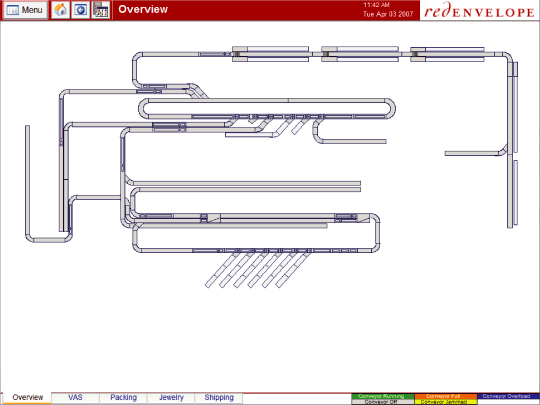
| • | Menu – The menu provides access to various functions: |
| O | System Views – access to Detail View screens | ||
| O | Users (not shown on menu above) – this can be added upon request to provide secure access to certain functions (system shutdown, for example) | ||
| O | System Start/Stop – displays the system start/stop pop up page | ||
| O | Help |
| § | Conveyor color scheme – displays the conveyor color pop up page | ||
| § | About DCSware – displays contact information |
50
| • | Navigation Tabs – located across the bottom of the screen, these tabs provide quick access to the zoomed in detail view screens | ||
| • | Conveyor Color Key – located in the bottom right corner of the screens, this section explains the meaning of the conveyor colors | ||
| • | Date – today’s date appears in the upper right hand corner of all main pages Time – the current time appears in the upper right hand corner of all main pages |
51
7.1.2 Overview Main Page

| • | This page will display a low detail view of all DCS conveyor | ||
| • | Able to diagnose the status of entire areas at a glance |
52
User Security
Available upon request, user login/logout control can be added to provide some level of security so that only certain people have the ability to perform certain functions (such as turning the conveyor system on or off and shutting down the DCSware system).
Typical DCS User Security includes:
— Guest account – can view conveyor status
— A maintenance account – can perform maintenance tasks
— A management/full control account – can add users and fully control the system
— A maintenance account – can perform maintenance tasks
— A management/full control account – can add users and fully control the system
Alarms
Events that require immediate user intervention are displayed on every page. Standard DCSWare HMI systems display:
— Jams
— Motor faults
— E-stops
— Motor faults
— E-stops
Example Alarm Window – displays on every screen if there is an alarm
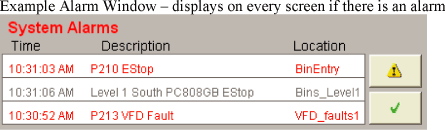
Starting Sections of the System
Many conveyor systems are divided into functional zones. These zones can be started and stopped individually or globally from the DCSware system.
Real Time Information
The DCSware system tracks and records real-time data on the performance of the conveyor system and displays it on the screens (usually on the zoomed detail view screen for a particular area). This data is not logged and resets at midnight.
Example of data types that are typically recorded:
— Sorters
| O | Induction count | ||
| O | Divert failure count | ||
| O | No Read count | ||
| O | No Reads percentage |
— Per Divert Lane
| O | Divert Count | ||
| O | Full Count |
53
Other types of data can also be tracked in real-time, for example e-stop counts, and can also be displayed. DCSware can also log data to a database for history tracking, but this feature is an add-on cost to the end user (See Data Logging Option below).
User Help
User help is available from the menu button and provides multiple interfaces:
| – | A page describing the colors and what they mean | ||
| – | A page with DCS Contact information |
| 7.2 | DCSware HMI System Hardware | |
| Primary Setup for Two or less HMI Locations: | ||
| – | Dell Desktop with monitor, keyboard, mouse |
| o | Touch Screen Optional |
| – | Enclosure for the computer | ||
| – | Windows Operating System Licensing | ||
| – | Development Software System Licensing | ||
| – | 1/2 hour UPS system |
| Primary Setup for Three or more HMI Locations: |
| – | Terminal Services Computer | ||
| – | CAL Licensing equal to the number of HMI Locations | ||
| – | 1/2 hour UPS system | ||
| – | One Thin Client with monitor, keyboard, mouse per location |
| o | Touch Screen Optional |
| – | Enclosure for the computer |
| 7.3 | Optional Software Modules |
| 7.3.1 | Shift Time Module |
Daily Statistics are recorded for up to three shifts. The current days shifts are displayed on the touchscreen. Any statistic that is currently displayed on a per-day level can be displayed on a user configurable three shift level.
| 7.3.2 | Data Logging Module |
Data logging is available as an option. Data logging comes with the following hardware:
| – | An additional computer | ||
| – | Data storage for 1 year | ||
| – | Microsoft SQL processor licensing, allowing unlimited connections by client’s local computers. | ||
| – | 1/2 hour UPS system |
54
Standard statistics recorded are:
| – | jam counts and jam lengths | ||
| – | motor fault counts and motor fault lengths | ||
| – | full counts and full lengths | ||
| – | motor on counts and motor on lengths | ||
| – | motor off counts and motor off lengths | ||
| – | E-stop counts and E-stop lengths | ||
| – | sorter induction counts | ||
| – | sorter individual divert counts | ||
| – | sorter no read counts | ||
| – | sorter divert failure counts | ||
| – | sorter divert full counts | ||
* This information is recorded and stored hourly or by shift
| 7.3.3 | Reporting Module |
This module is to be purchased in conjunction with the Data Logging Module in Section 7.3.2. The base reporting model includes all the necessary software to connect five concurrent users to the software system as well as the development of three custom reports. These reports are to be developed and designed by the end user. One report may be designated as a ‘conveyor health’ report and will be designed by DCS and contain information concerning jams, e-stops, and sorter information for the past week in total. Reporting is done utilizing Crystal Reports software. DCS will provide training to enable customization by the end user.
55
| 8.0 | Items to Provide | |
| 8.1 | DCS to Provide |
In addition to the items specifically outlined elsewhere in this proposal, DCS will also provide:
| 1) | Conveyor components, supports, devices, and guarding as specified in this proposal. | ||
| 2) | All PLC level, hardwired and pneumatic controls required for the proper operation of the conveyor system, as defined in this proposal. | ||
| 3) | Responsibility for implementing the proposed system, including Project Management for coordinating the design, engineering, scheduling, and installation of the proposed system. | ||
| 4) | A properly supervised, trained, non-union work force for the mechanical installation, air piping and field wiring of the proposed system. | ||
| 5) | All necessary lift equipment to facilitate the mechanical and electrical installation of the system as proposed. | ||
| 6) | Compliance with the most recent version of applicable OSHA, CEMA, and ANSI standards, as written at the time of this proposal. We will also comply with any state and local codes and requirements, however the cost and schedule impact of compliance with any state or local codes (such as layout modifications, equipment ratings, permits and the cost of obtaining them, etc.) are not included in this proposal. | ||
| 7) | Regular clean up of the job site during installation, including trash and packing material removal to customer-provided dumpsters. | ||
| 8) | Three (3) copies of maintenance manuals with spare parts listings, as-built layout drawings and electrical schematics at the completion of the project. A preliminary spare parts listing will be provided prior to system implementation to aid RedEnvelope in obtaining the appropriate parts to support the system commissioning. |
56
| 8.2 | RedEnvelope to Provide (or Others) |
| 1) | All fire protection equipment required as a result of the system installation, including sprinklers, fire door openings, fire doors and alarm signals to the conveyor control system. | ||
| 2) | Any electrical or mechanical permits as required by state or local authorities. | ||
| 3) | 480V/3ph/60Hz power to the line-side of disconnects in the individual motor control panels. There could be one to three individual control panels for the entire system, requiring a total of 400 Amps with a maximum Short Circuit Current Rating of 5,000 Amps per control panel. | ||
| 4) | Additional SKU storage mediums and installation as outlined by DCS in this proposal. | ||
| 5) | A good supply of 100 psi clean, dry air to multiple points around the system as indicated by DCS. | ||
| 6) | Communication wiring between host computer and the Conveyor Control PLC. | ||
| 7) | A representative sample of product and labels to be used for system design and testing. Product must be a complete representation of all sizes and weights of products to be handled, in quantities defined by the Project Manager. Because this product will be tested several times through the system, some damage of test product should be expected. | ||
| 8) | Responsibility for the proper calculation, collection and payment of any taxes required as a result of this work. | ||
| 9) | Purchase recommended spare parts prior to system run-off to assist DCS in warranty. | ||
| 10) | Two day turn-around of all Approval Drawings. | ||
| 11) | Manpower to load and unload system during commissioning. | ||
| 12) | Server for DCS Middleware Software and a licensed version of SQL Server. | ||
| 13) | Please see the Standard Terms & Conditions located in Appendix A for further information. |
57
| 9.0 | Basis of Offering | |
| 9.1 | Investment Outline |
| 9.1.1 | Order Fulfillment System Base Investment Offering |
Total turn-key investment includes: SKU Analysis, Engineering, Equipment as outlined, mechanical installation, electrical installation, project management and operator training. The investment figures presented are based on DCS providing both the original conveyor system and empty tote overhead conveyor system.
|
Total Turn-key Investment for Base System: | * | |||
|
| ||||
|
9.1.2 Optional Order Fulfillment System Investment Offerings | ||||
|
| ||||
|
A. Additional Divert for Existing Shipping Sorter | ||||
|
| ||||
|
Total Turn-key Investment: | * | Adder | ||
|
| ||||
|
B. Upgraded In-Motion Scale for Existing Shipping Sorter (40 CPM, +/- 0.01 lbs accuracy) | ||||
|
| ||||
|
Total Turn-key Investment: | * | Adder | ||
|
| ||||
|
C. Upgraded In-Motion Scale for Existing Shipping Sorter (53 CPM, +/- 0.01 lbs accuracy) | ||||
|
| ||||
|
Total Turn-key Investment: | * | Adder | ||
|
| ||||
|
D. Trash Conveyor for Existing Picking | ||||
|
| ||||
|
Total Turn-key Investment: | * | Adder | ||
|
| ||||
|
E. Replenishment Line for Existing Picking | ||||
|
| ||||
|
Total Turn-key Investment: | * | Adder | ||
|
| ||||
|
F. Remote HMI Interface Touch Screen | ||||
|
| ||||
|
Total Turn-key Investment: | * | Adder |
* Confidential treatment has been requested for portions of this exhibit. The copy filed herewith omits the information subject to the confidentiality request. Omissions are designated as “*.” A complete version of this exhibit has been filed separately with the Securities and Exchange Commission.
58
\
| 9.1.3 | Terms & Conditions |
|
• | * | Upon Layout Design Acceptance (March 31st): | Net 30 days | |||||
|
• | * | Upon Delivery of Detailed Approval Drawings (April 13th): | Net 30 days | |||||
|
• | * | Upon 1st Shipment of Equipment (May 14th): | Net 30 days | |||||
|
• | * | Upon Completion of Installation (September 14th): | Net 30 days | |||||
|
• | * | Upon Final Acceptance by RedEnvelope (September 30th): | Net 30 days | |||||
| 1) | Prices are valid for 30 days. | ||
| 2) | Above prices do not include taxes. | ||
| 3) | Above prices do not include freight. |
| Freight: Collect, FOB Shipping Point |
** Please refer to the Standard Terms & Conditions located in Appendix A for further information **
* Confidential treatment has been requested for portions of this exhibit. The copy filed herewith omits the information subject to the confidentiality request. Omissions are designated as “*.” A complete version of this exhibit has been filed separately with the Securities and Exchange Commission.
59
| 9.2 | Preliminary Project Schedule |
60
Proposal Notes
DCS Proposal Acceptance RevB — PM07-6636
June 6th, 2007
Mr. Frank Buettner
President & Chief Operating Officer
RedEnvelope, Inc
149 New Montgomery Street
San Francisco, CA 94105
President & Chief Operating Officer
RedEnvelope, Inc
149 New Montgomery Street
San Francisco, CA 94105
Re: DCS Proposal Acceptance RevB — PM07-6636 (Including Proposal PM07-6636 Addendum #1)
Dear Mr. Buettner,
This letter describes RedEnvelope’s agreement regarding their engagement of Designed Conveyor Systems of Michigan (DCS) to implement the turn-key system upgrades spelled out in DCS’ Proposal PM07-6636 dated April 6, 2007 and Addendum #1. The system upgrades are for RedEvelope’s existing material handling and order fulfillment system in their Lockbourne, Ohio Order Fulfillment Center.
The system upgrades presented in this proposal are based on the engineering study performed by DCS. This study included a thorough evaluation of all the data presented to determine the most appropriate equipment to use based on rates of usage, staffing requirements, and space utilization. Requirements followed by DCS for the design and implementation of this project include the following: must be contained within RedEnvelope’s existing space in Lockbourne, Ohio; the system must be fully operational no later than September 28th, 2007 based on the original implementation schedule; minimum thru-put must be 35,000 orders; the complete project budget must not exceed approximately *.
Deliverables provided in this proposal include: Scope of Proposal, Description of Proposed Operation, Specifications and Engineering Calculations, Drawings/Sketches/Concepts/Layouts, Preliminary Project Schedule and a Mechanical Equipment and Investment Outline for the project.
If RedEnvelope accepts this proposal and proceeds with implementation of the project, DCS’s fee for the engineering study shall be included in the investment for implementation of the project. However, if RedEnvelope chooses not to select DCS to implement the plan, RedEnvelope shall pay DCS for its Time and Materials used during the development stage, not to exceed *. Upon payment of these fees, all deliverables of the development phase shall become the property of RedEnvelope to be used for any purpose.
 | Designed Conveyor Systems of Michigan, Inc. 4890 Kendrick St. SE Grand Rapids, MI 49512 (616) 977-3950 phone(616) 977-5006 fax Jason. Perks@dcsmich.com |
* Confidential treatment has been requested for portions of this exhibit. The copy filed herewith omits the information subject to the confidentiality request. Omissions are designated as “*.” A complete version of this exhibit has been filed separately with the Securities and Exchange Commission.
Page 1 of 2
DCS Proposal Acceptance RevB — PM07-6636
When we move forward with the project, DCS will implement the base system described in this proposal as a turn-key project (that is, DCS will provide RedEnvelope with all design, engineering, architectural and other professional services, construction management, labor, materials). Further, given the seasonality of RedEnvelope’s business, this contract will include DCS’ firm commitment to have the system fully operational by September 28th, 2007 based on the original implementation schedule.
If you agree to these terms, please sign in the space provided below.
We look forward to continuing our successful partnership with RedEnvelope!
Sincerely,
|
Jason Perks | ||
|
| ||
|
/s/ Jason Perks
| ||
|
Designed Conveyer Systems | ||
|
4890 Kendrick, SE | ||
|
Grand Rapids, MI 49512 | ||
|
| ||
| Agreed and accepted this 7 day of June, 2007. | ||
|
| ||
|
Frank Buettner | ||
|
| ||
|
/s/ Frank Buettner
| ||
|
RedEnvelope, Inc | ||
|
149 New Montgomery Street | ||
|
San Francisco, CA 94105 | ||
|
| Designed Conveyor Systems of Michigan, Inc. 4890 Kendrick St. SE Grand Rapids, MI 49512 (616) 977-3950 phone(616) 977-5006 fax Jason. Perks@dcsmich.com | Page 2 of 2 |